
- Expand Landscape Resilience
Increase the Use of
Beneficial Fire
California’s landscapes are, and always have been, shaped by fire. It’s not a question of if these places will burn, it’s a question of when and how. Now is the time to elevate the voices of California’s Indigenous and local communities— the original stewards of fire—and to work together to bring beneficial fire back to California’s landscapes and people.”
- Lenya Quinn-Davidson,
Fire Network Director, University of California Agriculture and Natural Resources
Why this matters
Beneficial fire, which includes prescribed burns, cultural burns, and managed natural fires, is the most cost-effective and widely applicable strategy to increase wildfire resilience across much of California. Beneficial fire can promote healthy natural landscapes and protect communities from wildfire by reducing high fuel loads and forest densities caused by historical fire exclusion. California’s historical fire regime has been shaped by fire from both lightning and Indigenous practices. Restoring this natural fire regime and returning beneficial fire to the land requires a long-term strategic vision to address workforce gaps, permitting challenges, and public health concerns.
What has been accomplished
California has enacted new policies, programs, and funding pathways since 2021 to significantly expand the use of beneficial fire. These accomplishments include:
- Nearly doubling prescribed fire treatments between 2021 and 2023 with 260,000 acres treated in 2023.
- Establishing the State-Certified Prescribed Fire Burn Boss program.
- Changing the state’s liability laws to provide protections for beneficial fire practitioners (SB 332).
- Creating the Prescribed Fire Liability Program Fund (SB 926).
- Reducing barriers for California Native American tribes to conduct cultural burns in their ancestral territories (SB 310).
Key Actions
Develop a Robust Beneficial Fire Workforce
- CAL FIRE will support a beneficial fire training network by developing and promoting training, mentorship, and capacity building networks that include scalable curriculum development across skill levels.
- State agencies will pursue long-term, sustainable funding for training networks and workforce capacity, with focused support for community-led efforts including training exchanges and prescribed burn associations. CAL FIRE, subject to the availability of funds, will pursue developing a dedicated Beneficial Fire Grants Program.
Protect Public Health and Improve Public Engagement
- As described in the Advance Public Health, Safety, Evacuation and Recovery section CDPH and CARB will work with local air districts, health departments, and community-based organizations to expand notifications and communications; improve coordination of data gathering, integration and sharing; and coordinate and scale the equitable distribution of mitigation resources such as masks, air cleaners, and Clean Air centers.
- Subject to the availability of funds, CARB and CAL FIRE will develop an Air Resource Advisor program to embed qualified air quality professionals on burn management teams and with beneficial fire planners and practitioners
Support Tribal Leadership and Cultural Burning
- State agencies will review policies and identify potential barriers to the exercise of reserved, retained, and other rights by tribes and their members to engage in cultural burning and other forms of Indigenous stewardship and ensure that the exercising of these rights is welcomed and encouraged.
- CNRA and CalEPA will work with California Native American tribes, cultural practitioners, local knowledge holders, as well as others as appropriate to review California-directed recommendations in the Good Fire II report for feasibility of implementation.
Improve Regulatory Efficiency
- As described in the Streamline Regulatory Programs section, CNRA and CalEPA will lead the development of a streamlined regulatory framework to fast-track beneficial fire projects.
- CARB and CAL FIRE will work with the California Air Pollution Control Officers Association (CAPCOA) to establish a framework for early, frequent, and meaningful collaboration between prescribed fire practitioners and air districts; and to establish feasible best practices and standardized criteria for beneficial fire permits and smoke management plans.
Increase Beneficial Fire Scale and Efficiency
- As described in the Establish Fire Management Zones and Strategic Fuel Breaks section, CAL FIRE and the USFS, in coordination with key landowners and regional partners will develop and operationalize fire management zones (also known as potential operational delineations, or PODs) to increase opportunities for large-scale beneficial fire treatments, including by leveraging previous fire footprints as anchoring and holding features for future treatments.
- As described in the Accelerate Planning and Priority-Setting section, the Task Force, in partnership with the Wildfire Science and Technology Commons, will continue to update the California Landscape Metrics and partner with CNRA, CAL FIRE, CARB, and other data providers to incorporate beneficial fire data, monitoring and assessment programs into its Wildfire and Landscape Resilience Data Hub.
- CDPH, CARB, and CAL FIRE will improve coordination of data gathering, integration and sharing across project planning, air quality management and public health systems to better assess trends in air quality and health impacts attributable to beneficial fire smoke, and enable enhanced pre-planning and coordination among practitioners, air districts, and local health jurisdictions.
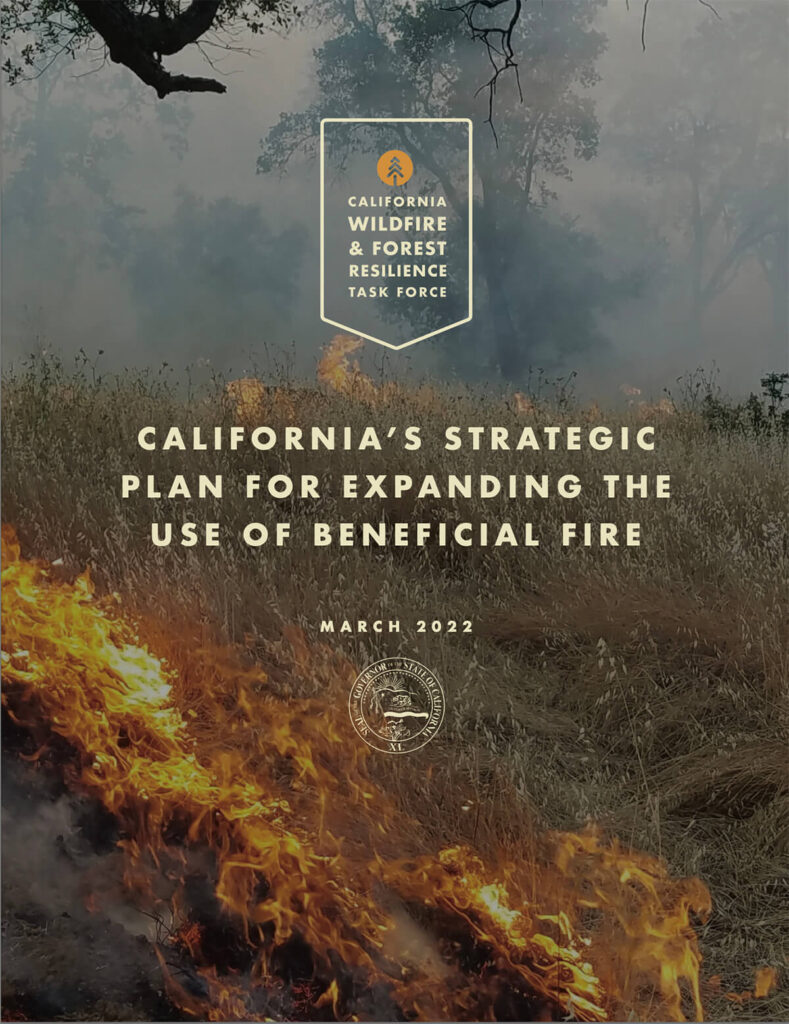
Read California's Strategic Plan for Expanding the Use of Beneficial Fire for a full list of actions.
Released in 2022, the Plan provides an overview of California’s history of fire use and a roadmap for the state to bring good fire back to the landscape.
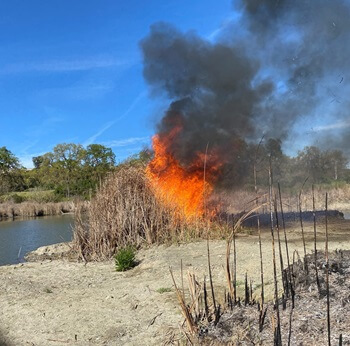
A Landmark Cultural Burn Agreement:
In March 2025, The Karuk Tribe and the California Natural Resources Agency (CNRA) signed the first cultural burning agreement under SB 310. This landmark legislation and agreement acknowledge tribal sovereignty and addresses historical injustices while contributing to the mitigation of catastrophic wildfire by enabling CNRA and local air districts to enter into agreements with federally recognized California Native American tribes to support them in conducting cultural burns in their ancestral territories.
Regional Considerations:
While beneficial fire is essential to landscape resilience across much of California, beneficial fire may not be an appropriate tool in areas that are already experiencing fires more frequently than they did historically. For example, in Southern California shrublands, too much fire can lead to conversion of native vegetation to more flammable non-native grasses, resulting in even greater fire risk.
Learn More

- Beneficial Fire Work Group and Resources

- Prescribed Fire

- National Prescribed Fire Resource Mobilization Strategy
- RCD led Post-Fire Disaster Recovery: EFRTs
- Return to All Shared Strategies